
 Date: Aug 08 2025 - 06:29
- Updated: Aug 14 2025 - 08:28
Date: Aug 08 2025 - 06:29
- Updated: Aug 14 2025 - 08:28
 Category: 6G
 Tags: 5G, 6G
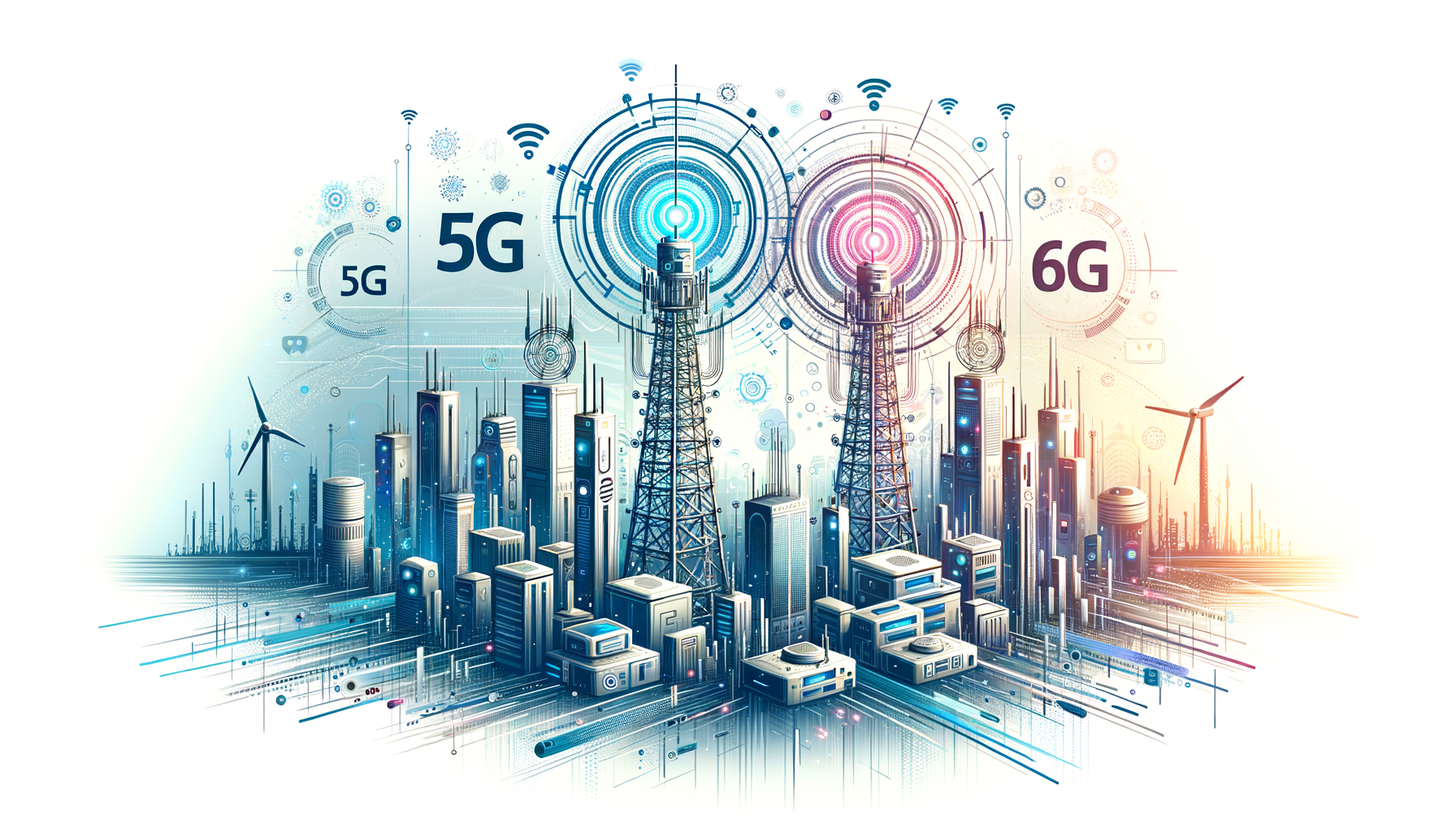
With the rise of technology and the ever-increasing demand for faster and more reliable connectivity, the development of wireless networks has become crucial. The current generation of wireless network technology, 5G, has only just begun to roll out, but discussions about the next generation, 6G, have already begun. In this blog post, we will explore the key differences between 6G and 5G and why it matters for the future of wireless communication.
5G stands for fifth-generation wireless network technology. It is the latest iteration of wireless network technology and promises to deliver faster speeds, lower latency, and increased capacity compared to its predecessor, 4G. 5G operates on higher frequency bands, known as millimeter waves, which allow for the transmission of large amounts of data at high speeds.
This technology is expected to revolutionize various industries, including healthcare, transportation, and communication, as it enables the use of technologies such as the Internet of Things (IoT), augmented reality (AR), and virtual reality (VR).
6G, on the other hand, is the next generation of wireless network technology that is currently in the research and development phase. It is expected to be even faster and more reliable than 5G, with data speeds reaching up to 1 terabit per second (Tbps).
6G will also operate on even higher frequency bands, known as terahertz waves, which have a much shorter wavelength compared to millimeter waves. This will allow for the transmission of data at even higher speeds and with lower latency.
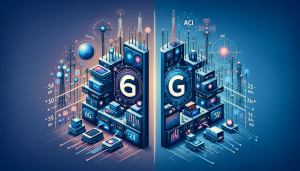
The main difference between 6G and 5G lies in the frequency bands they operate on. While 5G operates on millimeter waves, which have a frequency range of 24-100 GHz, 6G will operate on terahertz waves, which have a frequency range of 100-300 GHz. This means that 6G will be able to transmit data at a much higher frequency, resulting in faster speeds and lower latency.
Another difference between the two technologies is the use of Artificial Intelligence (AI). 6G is expected to heavily rely on AI to optimize network performance and improve user experience. This will allow for more intelligent network management and better adaptation to changing network conditions. On the other hand, while 5G also has the capability to utilize AI, it is not expected to be as integrated as it will be in 6G.
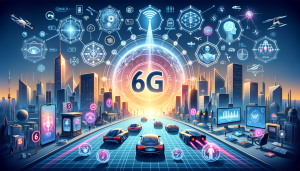
The development of 6G may seem premature, considering that 5G is still in its early stages of deployment. However, it is essential to start planning for the future of wireless networks to ensure that we stay ahead of the increasing demand for faster and more reliable connectivity.
6G will open up new possibilities for technologies that were not feasible with previous generations, such as real-time holographic communication and remote surgery. It will also play a crucial role in the development of smart cities and autonomous vehicles, as it will provide the necessary infrastructure for these technologies to operate effectively.
Moreover, the development of 6G will also have a significant impact on the economy. It is estimated that 5G will contribute $13.2 trillion to the global economy by 2035. With 6G offering even faster speeds and lower latency, it is expected to have an even more significant impact on economic growth, job creation, and innovation.
While 6G promises to be a game-changer for wireless network technology, there are still many challenges and limitations that need to be addressed. One of the main challenges is the implementation of terahertz waves, as they have a shorter wavelength, making it difficult to penetrate through objects and travel long distances. This may require a significant increase in the number of base stations, which could be costly and challenging to implement.
Another challenge is the development of new technologies and infrastructure to support 6G. This will require significant investments in research and development, as well as collaborations between governments, network operators, and technology companies.
In conclusion, while 5G is still in its early stages of deployment, discussions about the next generation, 6G, have already begun. 6G promises to be even faster and more reliable than 5G, with data speeds reaching up to 1 terabyte per second. It will open up new possibilities for technology and have a significant impact on the economy. However, there are still many challenges and limitations that need to be addressed before 6G can become a reality. It will be interesting to see how this technology develops and the impact it will have on our lives in the future.


