 Date: Aug 11 2025 - 12:38
 Category: Trojans
 Tags: cyberattacks, cybersecurity

In today’s digital age, many companies rely on remote access for their day-to-day operations. This allows employees to work from anywhere, increasing productivity and efficiency. However, with remote access comes the risk of cyber attacks, specifically from Remote Access Trojans (RATs). These malicious programs can easily bypass corporate defenses and compromise sensitive data. In this blog post, we will dive into the world of RATs and explore how they breach corporate firewalls, putting companies at risk.

Remote Access Trojans, or RATs, are a type of malware that gives hackers unauthorized access to a victim’s computer. They are often disguised as legitimate software or files, making them hard to detect. Once installed, they open a backdoor to the victim’s system, allowing the attacker to remotely control the computer and access any information stored on it.
RATs have been around for a long time and have evolved over the years. Initially, they were used for legitimate purposes, such as providing technical support or remote access to a computer. However, cybercriminals quickly realized their potential for malicious activities and started using them for their own gain.

One of the main reasons why RATs are so dangerous is their ability to bypass firewalls, which are the first line of defense for any corporate network. Firewalls act as a barrier between a trusted internal network and an untrusted external network, such as the internet. They monitor incoming and outgoing network traffic, filtering out any malicious activity.
RATs use various techniques to evade firewalls and gain access to corporate networks. One common method is to disguise themselves as legitimate traffic, such as HTTP or HTTPS. Since these protocols are commonly used for web browsing, they are usually allowed through firewalls. This allows RATs to slip through undetected.
Another way RATs bypass firewalls is by exploiting vulnerabilities in the network. These vulnerabilities can be found in outdated software or misconfigured firewalls. Once the RAT gains access to the network, it can disable or manipulate the firewall rules, giving it free rein to move laterally within the network and access sensitive data.
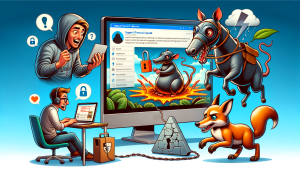
RATs can spread through various means, including phishing emails, infected websites, or even through social engineering techniques. Phishing emails are a popular method for spreading RATs. These emails often contain malicious attachments or links that, when clicked, download the RAT onto the victim’s computer.
Infected websites can also spread RATs through drive-by downloads. These are downloads that happen automatically when a user visits a compromised website. The user is usually unaware that the download is happening, making it easier for the RAT to infiltrate the system.
Social engineering techniques, such as fake tech support calls or fake software updates, can also be used to distribute RATs. Attackers trick users into giving them remote access to their computers, allowing them to install the RAT without the user’s knowledge.

Once a RAT has successfully breached a corporate network, it can do a lot of damage. They can steal sensitive data, such as login credentials, financial information, or intellectual property. They can also install additional malware, open backdoors for future access, or even completely take over a victim’s computer.
RATs can also be used to spy on employees, allowing attackers to gather information about the company’s operations and plans. This information can then be used for competitive advantage or sold on the dark web.

As we have seen, RATs can cause significant harm to companies, making it crucial for them to have robust defenses in place. Here are a few ways companies can protect themselves from RATs:
– Employee education: Companies should educate their employees about the dangers of RATs and how to identify and avoid them. This includes being cautious of suspicious emails, links, and attachments.
– Regular software updates: Companies should ensure that all software and systems are up to date, including firewalls. This helps to patch any vulnerabilities that can be exploited by RATs.
– Network segmentation: Segmenting a network into smaller, more manageable parts can limit the spread of a RAT if it does manage to breach the defenses.
– Use of multi-factor authentication: Implementing multi-factor authentication can add an extra layer of security, making it harder for attackers to gain unauthorized access.
Remote Access Trojans pose a significant threat to companies, bypassing corporate defenses and compromising sensitive data. It is crucial for companies to understand the risks associated with remote access and take necessary precautions to protect themselves. By educating employees, regularly updating software, and implementing security measures, companies can strengthen their defenses and reduce the risk of falling victim to a RAT attack. Remember, prevention is always better than cure when it comes to cyber attacks. Stay vigilant, and stay safe.