 Date: Sep 01 2025 - 07:21
- Updated: Sep 02 2025 - 07:36
Date: Sep 01 2025 - 07:21
- Updated: Sep 02 2025 - 07:36
 Category: Data Management
 Tags: AI, data integration

Data integration is a crucial aspect of any organization’s data management strategy. It involves combining data from different sources and formats to provide a unified view of the information. With the increasing volume, variety, and velocity of data, traditional manual data integration processes are no longer efficient. This is where artificial intelligence (AI) and automation come into play. By leveraging AI and automation, organizations can not only streamline their data integration processes but also improve accuracy and efficiency. In this blog post, we will explore how AI and automation can help organizations master data integration.

Data integration is the process of combining data from different sources, such as databases, applications, and files, into a single, unified view. This view can then be used for analysis and decision-making. Data integration is a critical step in the data management process as it allows organizations to get a holistic view of their data.
Traditionally, data integration has been a manual and time-consuming process, involving data analysts and IT professionals manually extracting, transforming, and loading data from various sources. This process is not only labor-intensive but also prone to errors, leading to delays and inaccurate insights. With the increasing amount of data being generated, manual data integration is no longer a viable option.
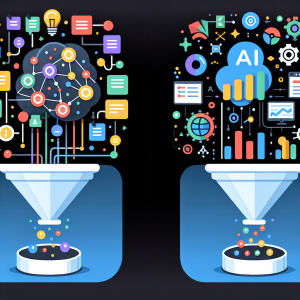
AI has the potential to transform data integration by automating various tasks and improving accuracy. By leveraging machine learning algorithms, AI can analyze and map data from different sources, identify patterns, and suggest the most efficient way to integrate the data. This eliminates the need for manual data mapping, saving time and reducing errors.
AI can also handle complex data integration tasks, such as data cleansing and matching, more accurately and efficiently than humans. It can identify and fix data quality issues, such as missing or duplicate data, in real-time, ensuring that the integrated data is clean and reliable.

Automation involves using technology to perform manual tasks without human intervention. In data integration, automation can help organizations streamline their processes and reduce the time and effort required for data integration. Automation can be applied to various tasks, such as data extraction, transformation, and loading (ETL), data mapping, and data validation.
By automating these tasks, organizations can significantly reduce the time and effort required for data integration. Automation also ensures consistency and accuracy, as it eliminates the possibility of human errors. This leads to faster and more reliable data integration, allowing organizations to make data-driven decisions in real-time.
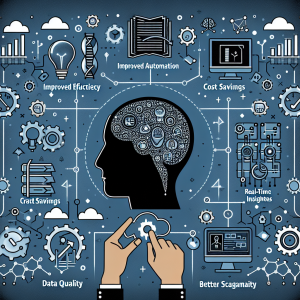
The combination of AI and automation in data integration offers several benefits to organizations, including:
– Improved efficiency: By automating manual tasks and using AI to handle complex data integration processes, organizations can significantly improve the efficiency of their data integration processes.
– Cost savings: Automation and AI can help reduce the time and effort required for data integration, leading to cost savings for organizations.
– Real-time insights: With AI and automation, data integration can be performed in real-time, providing organizations with timely and accurate insights for decision-making.
– Better data quality: AI can identify and fix data quality issues, while automation ensures consistency and accuracy, leading to better data quality.
– Scalability: With AI and automation, organizations can easily scale their data integration processes to handle large volumes of data without compromising on quality and efficiency.

While AI and automation offer many benefits, they also present some challenges that organizations need to be aware of. One of the main challenges is the need for skilled resources to develop and maintain AI and automation systems. Organizations also need to invest in the right tools and infrastructure to support these technologies.
Another challenge is the potential for bias in AI algorithms, which can lead to inaccurate insights and decisions. Organizations need to ensure that their AI systems are transparent and regularly audited to prevent bias.
In today’s data-driven world, mastering data integration is crucial for organizations to gain a competitive advantage. By leveraging AI and automation, organizations can streamline their data integration processes, improve efficiency and accuracy, and make data-driven decisions in real-time. However, it is essential to understand the challenges and invest in the right resources and tools to successfully implement AI and automation in data integration. With the right approach, organizations can harness the power of AI and automation to take their data integration to the next level.