 Date: Sep 01 2025 - 06:41
- Updated: Sep 02 2025 - 07:41
Date: Sep 01 2025 - 06:41
- Updated: Sep 02 2025 - 07:41
 Category: Data Management
 Tags: DataManagement, dataquality, IT

In today’s digital age, data has become the backbone of every enterprise. From customer information to financial records, businesses rely heavily on data to make important decisions and drive growth. However, with the increasing volume and complexity of data, ensuring its quality and reliability has become a major concern for enterprise IT teams. In this blog, we’ll explore the challenges of maintaining data quality and reliability in enterprise IT and discuss effective strategies to overcome them.
Before we dive into how to ensure data quality and reliability, it’s important to understand what these terms mean. Data quality refers to the accuracy, completeness, and consistency of data. In other words, it refers to how well data reflects the real-world entities it represents.
On the other hand, data reliability refers to the trustworthiness and consistency of data over time. In simple terms, it means that the data is consistently accurate and can be relied upon for decision-making.

Data quality and reliability are crucial for businesses for several reasons. Firstly, accurate and reliable data allows for better decision-making, leading to improved business outcomes. It also helps in identifying and addressing any issues or inefficiencies in business processes.
Moreover, data that is of high quality and reliability can be used for trend analysis and forecasting, giving businesses a competitive edge in the market.
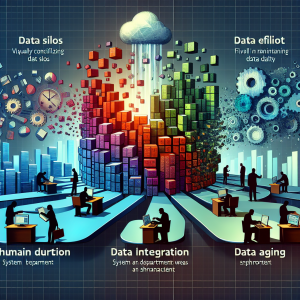
Maintaining data quality and reliability is no easy feat. In fact, it is one of the biggest challenges faced by enterprise IT teams. Some of the common challenges include:
– Data silos: When data is scattered across different systems and departments, it becomes difficult to ensure its consistency and accuracy.
– Human error: Data entry errors, typos, and other mistakes made by humans can greatly impact the quality and reliability of data.
– Data integration: As businesses collect data from various sources, it becomes challenging to integrate and reconcile it, leading to data discrepancies.
– Data aging: Over time, data can become outdated and lose its relevance, making it unreliable for decision-making.
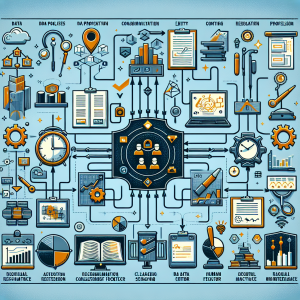
To overcome the challenges in maintaining data quality and reliability, businesses need to implement effective strategies. Here are some ways to ensure data quality and reliability in enterprise IT:
– Establish data governance: Data governance refers to the framework, policies, and processes for managing data. It helps in establishing standards for data quality and reliability and ensures that data is managed consistently across the organization.
– Implement data quality controls: Data quality controls involve processes and tools that validate and cleanse data to ensure its accuracy and completeness. This includes data profiling, data cleansing, and data validation techniques.
– Invest in data integration: As mentioned earlier, data integration is a major challenge for maintaining data quality and reliability. Investing in data integration tools and platforms can help in consolidating and reconciling data from various sources, ensuring consistency and accuracy.
– Automate data entry: Human error is a common cause of data quality issues. By automating data entry processes, businesses can reduce the chances of human error and improve data accuracy.
– Regular data maintenance: As data ages, it becomes less reliable. Regular data maintenance processes, such as data cleansing and archiving, can help in keeping data up-to-date and relevant.

Ensuring data quality and reliability is not just the responsibility of IT teams. Business teams also play a crucial role in maintaining the quality and reliability of data. There needs to be a strong collaboration between IT and business teams in order to effectively manage and maintain data.
Business teams can provide valuable insights into the data and help in identifying any discrepancies or issues, while IT teams can implement the necessary processes and tools to ensure data quality and reliability.
In conclusion, data quality and reliability are essential for businesses to make informed decisions and drive growth. With the increasing volume and complexity of data, it’s crucial for enterprise IT teams to have effective strategies in place to ensure its quality and reliability. By establishing data governance, implementing data quality controls, investing in data integration, and promoting collaboration between IT and business teams, businesses can overcome the challenges and maintain high-quality and reliable data for improved business outcomes.