 Date: Jul 01 2025 - 09:59
 Category: Cloud
 Tags: Cloud


In today’s digital age, the use of cloud technology has become a common practice for both individuals and businesses. The convenience and flexibility of cloud storage and services have made it an attractive option for storing and accessing data. However, with this convenience comes the concern of data security. It is essential to understand the potential risks and best practices for ensuring the security of your data in the cloud. In this blog post, we will explore the question, “How secure is your data in the cloud?” and discuss some best practices to keep your data safe.

Before we dive into cloud security, it is essential to understand what the cloud is and how it works. In simple terms, the cloud refers to a network of remote servers that store, manage, and process data over the internet. These servers are owned and operated by a cloud service provider, such as Amazon Web Services, Microsoft Azure, or Google Cloud. When you store data in the cloud, you are essentially storing it on these remote servers instead of your local computer or server.

While the cloud offers many benefits, it also comes with some potential risks. One of the most significant risks is the loss of data due to a security breach or cyber attack. Since your data is stored on remote servers, it is vulnerable to external threats, such as hackers or malware. Another risk is the potential for data loss due to human error or system failures on the cloud service provider’s end. Additionally, there is a risk of data being accessed or shared without proper authorization.

Now that we have discussed the potential risks, let’s explore some best practices for ensuring the security of your data in the cloud.
The first step in securing your data in the cloud is to choose a reputable and reliable cloud service provider. Do your research and select a provider that has a good track record of data security. Read reviews and ask for recommendations from trusted sources. Additionally, make sure the provider offers robust security measures and regularly updates their systems to protect against new threats.
One of the most basic yet crucial steps in securing your data in the cloud is to use strong passwords and implement multi-factor authentication. Avoid using easy-to-guess passwords and change them regularly. Multi-factor authentication adds an extra layer of security by requiring a second form of verification, such as a code sent to your phone, before accessing your data.
Encryption is the process of converting data into a code that can only be decoded with a key or password. When data is encrypted, even if it is accessed by an unauthorized party, it will be unreadable. Most cloud service providers offer encryption options for data at rest and in transit, but it is always a good idea to encrypt your data before uploading it to the cloud.
Backing up your data is crucial for data security, whether it is stored in the cloud or locally. In case of a security breach or data loss, having a backup of your data ensures that you can retrieve it quickly. Choose a cloud service provider that offers automatic backups or set up a regular backup schedule.
Outdated software and systems are vulnerable to cyber attacks, making them a significant threat to your data’s security. Make sure to keep your operating systems, applications, and software up to date with the latest security patches and updates.
Limit access to your data by only giving permission to those who need it.
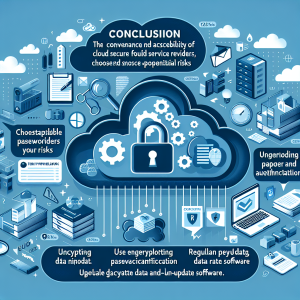
The cloud offers a convenient and accessible way to store and access data, but it also comes with some risks. However, by understanding these risks and implementing best practices for cloud security, you can keep your data safe. Choose a reputable cloud service provider, use strong passwords and authentication, encrypt your data, regularly back up your data, and keep your software up to date. By following these best practices, you can rest assured that your data is secure in the cloud.