
 Date: Aug 19 2025 - 11:42
 Category: Personal identity attacks
 Tags: AI, Cybercrime, cybersecurity, cyberthreats, threats

In today’s digital world, cyber threats are becoming increasingly sophisticated, making it challenging for organizations to protect their sensitive data and defend against identity attacks. In fact, identity theft is one of the fastest-growing crimes, with a new victim every two seconds. With the rise of remote work and the use of multiple devices, the risk of identity attacks is only increasing. This is where artificial intelligence (AI) comes into play. AI-driven threat detection is gaining popularity as a powerful tool to combat identity attacks. But the question is, will it be enough to keep identity attacks at bay? Let’s dive in and find out.

Before we delve into the role of AI in detecting identity attacks, let’s first understand what these attacks are. Identity attacks, also known as identity theft or fraud, occur when someone gains unauthorized access to another person’s personal information, such as their name, social security number, credit card details, or login credentials.
This information can be used to steal money, make fraudulent purchases, or even open new lines of credit in the victim’s name. With the increasing use of online platforms for financial transactions and personal data storage, identity attacks have become a significant concern for individuals and organizations alike.

Traditionally, organizations have relied on manual methods to detect identity attacks, such as reviewing credit reports, monitoring account activities, and conducting security audits. While these methods may have been effective in the past, they are no longer sufficient in today’s rapidly evolving threat landscape.
Manual methods are time-consuming, expensive, and prone to human errors. Additionally, they are not equipped to handle the large volume of data generated by online transactions and activities. As a result, traditional methods are falling short in detecting and preventing identity attacks.

This is where AI-driven threat detection comes into play. AI is a branch of computer science that enables machines to learn from data, identify patterns, and make decisions without explicit programming.
By leveraging machine learning algorithms, AI can analyze large volumes of data in real-time, detect anomalies, and identify potential threats. This makes it a powerful tool for detecting identity attacks, which often involve abnormal activities or behaviors.
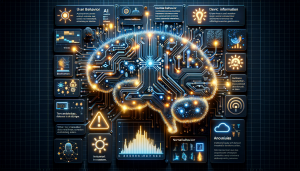
AI-driven threat detection works by analyzing a wide range of data, such as user behavior, network traffic, and device information, to identify patterns and anomalies. These patterns and anomalies are then compared to a baseline of normal behavior to determine if there is any suspicious activity. If an anomaly is detected, the AI system can trigger an alert, allowing security teams to take action before the attack escalates.
One of the key advantages of AI-driven threat detection is its ability to continuously learn and adapt to new threats. As AI systems analyze more data, they become smarter and more accurate in identifying potential threats. This makes them well-equipped to handle the constantly evolving nature of identity attacks.

The use of AI in threat detection offers several benefits, especially when it comes to identifying and preventing identity attacks. Some of these benefits include:
– Real-time detection: AI-driven threat detection can analyze data in real-time, allowing for immediate detection of potential threats.
– Improved accuracy: With the ability to analyze large volumes of data and learn from it, AI systems can detect even the most subtle anomalies, making them more accurate than traditional methods.
– Cost-effective: AI-driven threat detection is a cost-effective solution compared to manual methods, as it eliminates the need for human resources and can handle large volumes of data.
– Reduced false positives: AI systems can analyze data more comprehensively, reducing the number of false positives, which can be time-consuming and costly to investigate.
– Proactive approach: By continuously learning and adapting, AI systems can proactively identify and prevent identity attacks before they occur.
AI-driven threat detection is undoubtedly a powerful tool in the fight against identity attacks. With its ability to analyze large volumes of data in real-time, AI can detect anomalies and suspicious activities that traditional methods may miss. However, it is essential to remember that AI is not a silver bullet. While it can significantly improve threat detection, it should be used in conjunction with other security measures, such as multi-factor authentication and encryption, for a more comprehensive defense against identity attacks. With the increasing use of AI in threat detection, we can hope to see a decrease in the number of successful identity attacks and a safer digital world for all.


