
 Date: Oct 03 2025 - 10:29
 Category: Nvidia
 Tags: AI, Artificial Intelligence, Nvidia

In the world of artificial intelligence (AI), speed is everything. The faster a computer can process data, the better it can perform complex AI tasks. This is why the development of AI superclusters – massive networks of interconnected computers working together to power AI applications – is crucial in pushing the boundaries of AI technology. And now, NVIDIA, a leading technology company known for its graphics processing units (GPUs), is taking things to the next level with its photonics networking technology.
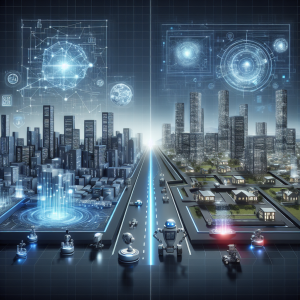
Before we dive into how NVIDIA’s photonics networking will transform AI superclusters, let’s first understand what it is and how it works. In simple terms, photonics networking is the use of light to transmit data instead of traditional electrical signals.
This technology utilizes optical fibers, which are capable of transmitting data at the speed of light – significantly faster than traditional copper cables. This makes photonics networking ideal for handling the massive amounts of data required for AI applications.
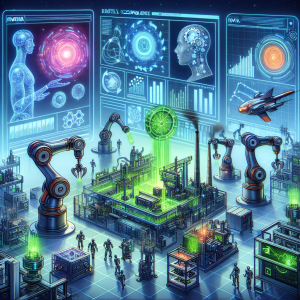
So, why is photonics networking necessary for AI superclusters? The answer lies in the nature of AI itself. AI algorithms require a vast amount of data to be processed quickly to make accurate decisions. This is where GPU’s come in – they are designed to handle parallel processing tasks, making them ideal for AI applications. However, even with powerful GPUs, the speed and efficiency of AI systems can still be limited by the speed at which data can be transmitted between computers.
This is where photonics networking comes in – by utilizing light, data can be transmitted at a much higher speed, making AI systems even more efficient.

NVIDIA’s photonics networking technology is set to revolutionize AI superclusters in several ways. Firstly, it will greatly increase the speed of data transfer between interconnected computers. This means that AI systems can process data faster and make decisions in real-time.
This is particularly useful in applications such as self-driving cars, where split-second decisions can mean the difference between life and death. With photonics networking, these decisions can be made faster and more accurately, improving the safety and efficiency of such applications.

Secondly, photonics networking will also greatly increase the scalability of AI superclusters. As AI technology continues to advance, the amount of data required for AI applications will only increase. Traditional copper cables may not be able to handle the massive amounts of data that future AI systems will require.
Photonics networking, on the other hand, has almost unlimited bandwidth, making it the perfect solution for handling the ever-growing data demands of AI applications. This means that AI superclusters can continue to expand and grow without being limited by data transfer speeds.
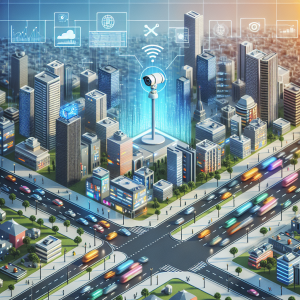
Another significant advantage of photonics networking is its energy efficiency. Traditional copper cables are limited in the distance they can transmit data without losing signal strength. This means that data centers housing AI superclusters need to be located close together, increasing energy consumption and costs.
With photonics networking, data can be transmitted over longer distances without any loss in signal strength. This means that data centers can be located further apart, reducing energy consumption and costs, making AI technology more sustainable and cost-effective.
In conclusion, NVIDIA’s photonics networking technology has the potential to transform AI superclusters in several ways. It will greatly increase the speed, scalability, and energy efficiency of these networks, pushing the boundaries of AI technology even further. With the ever-increasing demand for AI applications in various industries, the advancements in photonics networking are a significant step towards making AI systems more efficient and effective. We can’t wait to see what the future holds for AI superclusters powered by NVIDIA’s photonics networking.


