 Date: Mar 10 2026 - 08:43
 Category: Artificial Intelligence
In today’s digital age, more and more companies are shifting towards a distributed workforce, with employees working remotely from different locations. This trend has only accelerated with the recent global pandemic. While this has its benefits, such as increased flexibility and cost savings, it also presents new challenges for organizations, particularly when it comes to identity and access management (IAM).
IAM is the process of managing and controlling access to an organization’s resources, including data, applications, and systems. In a traditional office setting, IAM is relatively straightforward, with employees working within a closed network. However, with a distributed workforce, the traditional IAM approach may not be sufficient, and organizations need to adapt to ensure the security of their resources and data.
In this blog post, we will explore the importance of IAM for distributed workforces, the challenges it presents, and the strategies organizations can implement to effectively manage identities and access in a distributed work environment.

The first and foremost challenge of IAM for distributed workforces is the sheer number of endpoints and access points that need to be managed. In a traditional office setting, organizations can control access through firewalls and network perimeters. However, with employees working remotely, there is a vast range of devices, networks, and applications that need to be considered.
Moreover, with employees working from different locations and using different devices, it becomes challenging to ensure the security of data and resources. Remote workers may connect to unsecured networks or use personal devices that do not meet the organization’s security standards, making them vulnerable to cyber attacks.
Another challenge is the lack of physical control over devices. In a traditional office setting, organizations have physical control over their devices and can implement security measures such as biometric authentication. However, with remote workers, this is not possible, making it easier for unauthorized individuals to gain access to devices and data.
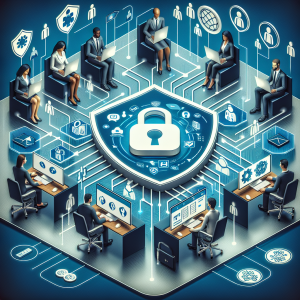
Effective IAM for distributed workforces is crucial for maintaining the security of an organization’s resources and data. With employees working remotely, the risk of data breaches and cyber attacks increases significantly. According to a survey by the Ponemon Institute, the average cost of a data breach in 2020 was $3.86 million, with remote work being a contributing factor.
IAM also plays a crucial role in ensuring compliance with regulations and industry standards. With employees accessing sensitive data from different locations, it becomes essential to implement proper authentication and authorization processes to comply with regulations such as the General Data Protection Regulation (GDPR) and the Health Insurance Portability and Accountability Act (HIPAA).
Moreover, effective IAM can improve the productivity of distributed workforces. By streamlining the access process, employees can quickly and securely access the resources they need to do their jobs, without wasting time on manual processes or waiting for approval.
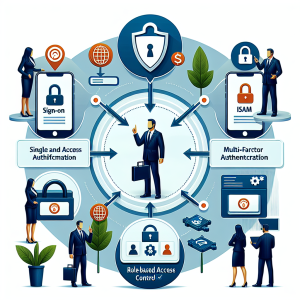
SSO allows employees to use one set of credentials to access multiple applications and systems, eliminating the need to remember multiple passwords. This reduces the risk of weak passwords and improves productivity by reducing the time spent on login processes.
MFA adds an extra layer of security by requiring employees to provide additional information, such as a one-time code sent to their phone, to access resources. This ensures that even if an employee’s credentials are compromised, the attacker cannot gain access without the additional authentication.
A VPN creates a secure connection between an employee’s device and the organization’s network. This encrypts the data transmitted between the two, making it more challenging for hackers to intercept and access sensitive information.
RBAC allows organizations to assign specific roles and permissions to employees based on their job responsibilities. This ensures that employees only have access to the resources they need to perform their tasks, reducing the risk of data breaches caused by human error.
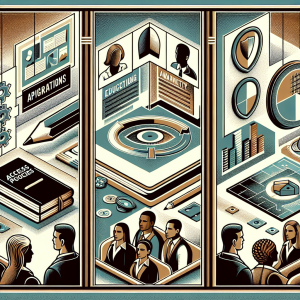
As the workforce and technology landscape evolve, it is essential to review and update access policies regularly. This ensures that only authorized individuals have access to resources and that access levels are appropriate for each employee’s role.
It is crucial to educate employees on the importance of IAM and the role they play in maintaining the security of the organization’s resources and data. Regular training and awareness programs can help employees understand the risks and how to identify and prevent potential threats.
Implementing a system to monitor user activity can help organizations identify and respond to potential security threats in real-time. It can also provide valuable insights into user behavior, which can be used to improve access policies and procedures.

As the trend towards remote work continues to grow, the need for effective IAM for distributed workforces will only become more critical. Organizations will need to adopt more advanced technologies, such as biometric authentication and artificial intelligence, to ensure the security of their resources and data.
Additionally, with the emergence of the Internet of Things (IoT), where devices are connected to the internet and can access organizational resources, the scope of IAM will expand even further, making it more challenging to manage identities and access.
IAM is a crucial aspect of maintaining the security of an organization’s resources and data, particularly in a distributed work environment. By understanding the challenges, implementing the right strategies and best practices, and staying ahead of emerging technologies, organizations can effectively manage identities and access for their remote workforce. It is crucial to constantly review and update IAM policies and procedures to stay ahead of potential threats and ensure the continued security of the organization’s resources and data.