
 Date: Aug 14 2025 - 12:37
 Category: Cybersecurity
 Tags: MFA, security
In today’s digital age, security breaches have become a common occurrence. From large corporations to small businesses, no organization is immune to cyber attacks. This has led to the rise of multi-factor authentication (MFA) as a means of protecting sensitive information. But with the increasing number of data breaches, some may question if MFA is still worth it in a post-breach world. In this blog post, we will explore the effectiveness of MFA and why it is still a crucial tool for protecting our digital identities.
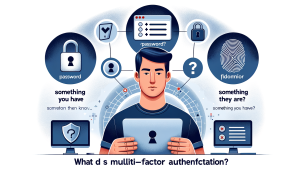
Before we dive into the question of whether MFA is still worth it, let’s first understand what it is. MFA is an authentication method that requires users to provide two or more forms of identification before gaining access to a system or account.
These factors can include something the user knows (such as a password), something they have (such as a security token), or something they are (such as biometric data). By combining multiple factors, MFA adds an extra layer of security to ensure that only authorized users can access sensitive information.
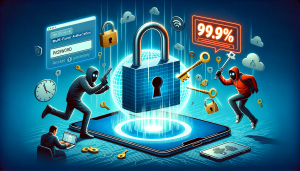
MFA has proven to be an effective tool in preventing unauthorized access to accounts and systems. According to Microsoft, implementing MFA can block over 99.9% of account compromise attacks. This is because even if a hacker manages to obtain a user’s password, they would still need the additional factor to gain access.
MFA also helps prevent phishing attacks, where hackers try to trick users into giving away their login credentials. With MFA, even if a user falls for a phishing email, the hacker would still not be able to access the account without the additional factor.
Despite the effectiveness of MFA, data breaches continue to occur at an alarming rate. In 2019 alone, there were over 1,500 reported data breaches, with over 164 million sensitive records exposed.
This has caused some to question the effectiveness of MFA in a post-breach world. After all, if even large corporations with advanced security measures in place can fall victim to data breaches, what chance does MFA have to protect our accounts?
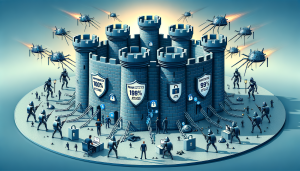
While data breaches have become more prevalent, it is essential to understand that not all breaches are created equal. Many of these breaches occur due to a lack of proper security measures, such as weak passwords or not using MFA.
In fact, a study by Google found that implementing MFA can prevent up to 100% of automated attacks, 99% of bulk phishing attacks, and 90% of targeted attacks. This shows that MFA can still be effective in preventing breaches, especially when combined with other security measures.
Additionally, MFA can also act as a deterrent for hackers. With the added layer of protection, hackers may be less likely to target accounts with MFA. They know that even if they manage to obtain login credentials, they would still need the additional factor to gain access. This added difficulty may cause them to move on to an easier target.

As technology continues to advance, so does the sophistication of cyber attacks. Hackers are finding new ways to bypass security measures, making it a constant battle for organizations to stay ahead. However, this does not mean that MFA is becoming obsolete.
In fact, MFA is evolving and adapting to these new threats. We are now seeing the rise of biometric authentication, such as fingerprint or facial recognition, as an additional factor for MFA. This not only adds an extra layer of security but also provides a more convenient and user-friendly experience.
In conclusion, while data breaches may still occur, MFA is still a crucial tool for protecting our digital identities. Its effectiveness in preventing unauthorized access, combined with its evolving nature, make it a necessary security measure in today’s digital landscape. Organizations and individuals should continue to implement MFA to protect their accounts and systems from cyber attacks. So, the next time you are prompted to use MFA, remember that it is still worth it and is helping to keep your information safe.


