
 Date: Jul 04 2025 - 06:16
 Category: Network
 Tags: cybersecurity, quantumcomputing
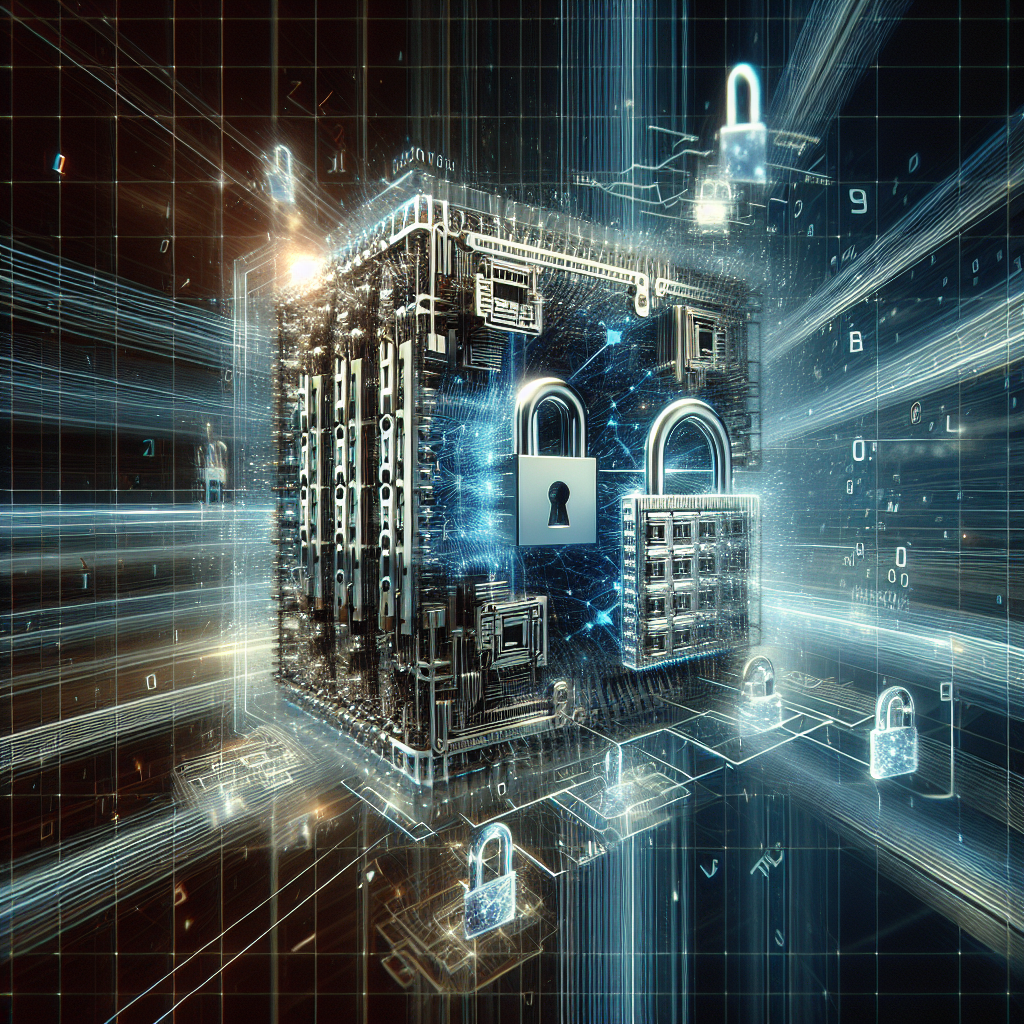
In today’s digital age, cybersecurity is more important than ever. With the increasing reliance on technology and the rise of cyber attacks, it is crucial for organizations to have strong and effective security measures in place. However, traditional methods of encryption and data protection may not be enough to keep up with the ever-evolving threats. This is where quantum computing comes in.
Quantum computing is a rapidly advancing technology that has the potential to revolutionize many industries, including cybersecurity. In this blog post, we will explore how quantum computing is the next frontier in cybersecurity and how it can help protect against future cyber threats.

Before delving into quantum computing’s role in cybersecurity, it’s important to have a basic understanding of what it is and how it differs from traditional computing.
Quantum computing is based on the principles of quantum mechanics, a branch of physics that studies the behavior of particles at a subatomic level. Unlike traditional computers that use bits to store and process information, quantum computers use quantum bits, or qubits, which can exist in multiple states simultaneously. This allows quantum computers to perform complex calculations and solve problems much faster than traditional computers.

To understand the need for quantum computing in cybersecurity, we must first examine the limitations of traditional computing methods.
One of the biggest threats to cybersecurity is the use of brute force attacks to crack encryption codes. This method involves trying every possible combination until the correct one is found. With the advancements in computing power, traditional computers are becoming faster and more efficient, making it easier for hackers to break encryption codes.
Additionally, traditional methods of encryption are based on mathematical algorithms that can be reverse-engineered. This means that as computers become more powerful, these algorithms become easier to crack.

Quantum computing has the potential to revolutionize encryption methods and make them virtually unbreakable. The ability of qubits to exist in multiple states at once allows quantum computers to perform calculations that would take traditional computers years, if not centuries, to solve. This means that encryption keys can be generated and cracked at a much faster rate, making it nearly impossible for hackers to decrypt sensitive data.
Quantum cryptography, a branch of quantum computing, also offers a more secure way of exchanging encryption keys. It uses the principles of quantum mechanics to create keys that are virtually impossible to intercept or duplicate. This eliminates the risk of key interception and ensures that only the intended recipient can access the encrypted data.

While quantum computing offers many advantages in terms of encryption, it also poses a threat to traditional methods. With the ability to process vast amounts of data at lightning speed, quantum computers can easily break traditional encryption methods.
To protect against quantum attacks, organizations must start implementing quantum-resistant encryption methods. These methods use mathematical algorithms that are specifically designed to withstand quantum computing power. Some examples of quantum-resistant encryption are lattice-based cryptography, code-based cryptography, and hash-based cryptography.

With the potential to make encryption virtually unbreakable, it’s no surprise that many organizations are investing in quantum computing for cybersecurity purposes. Major players in the tech industry, including Microsoft, IBM, and Google, are already working on developing quantum-resistant encryption methods.
However, quantum computing is still in its early stages, and it will take some time before it becomes widely available. In the meantime, organizations must continue to improve their traditional cybersecurity measures and start planning for the future of quantum computing.
In conclusion, quantum computing is the next frontier in cybersecurity. Its ability to perform complex calculations and generate virtually unbreakable encryption codes make it an invaluable tool in the fight against cyber threats. While it may still be a few years before quantum computing becomes mainstream, it’s essential for organizations to start preparing for the future and implementing quantum-resistant encryption methods. By staying one step ahead of cybercriminals, we can ensure a safer and more secure digital world.


