
 Date: Jul 31 2025 - 10:47
 Category: 6G
 Tags: 6G

As technology continues to advance at a rapid pace, we are constantly introduced to new and innovative ways to connect with the world around us. One of the most significant developments in recent years is the evolution of wireless communication, from the early days of 1G to the current 5G networks. But what about the next generation of wireless? In this blog post, we will explore the concept of 6G and what it means for the future of wireless communication.
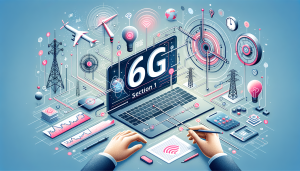
6G, also known as sixth-generation wireless, is the next iteration of mobile network technology that is currently being researched and developed by telecommunication companies and technology experts. It is expected to be the successor of 5G and is predicted to be available to the public in the late 2020s.
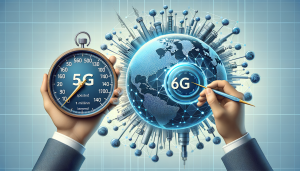
While 5G has just started to roll out worldwide, 6G is already being discussed and researched. So, what makes 6G different from its predecessor? One of the main differences is the speed. 6G is expected to offer data speeds up to 100 times faster than 5G, with the potential to reach up to 1 terabyte per second. This will allow for even more seamless and instantaneous communication and connectivity.
Another significant difference is the latency, which refers to the time it takes for data to travel from one point to another. 5G has a latency of around 1 millisecond, which is already significantly faster than 4G. However, 6G is expected to have a latency of just 0.1 milliseconds, making it almost instantaneous. This will be especially beneficial for applications that require real-time data processing, such as self-driving cars and remote surgery.

With faster speeds and lower latency, 6G has the potential to revolutionize various industries and improve our daily lives in many ways. Some of the potential benefits of 6G include:
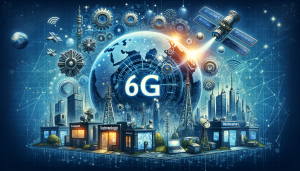
While the potential benefits of 6G are exciting, there are also challenges and concerns that need to be addressed before its widespread implementation. One of the main concerns is the cost. Building and deploying 6G infrastructure will be a massive investment for telecommunication companies, and it may also result in higher costs for consumers.
Another concern is the potential health risks associated with 6G technology. While there is no definitive evidence of health risks from wireless technology, some experts suggest that the higher frequency and intensity of 6G could pose health risks, especially for long-term exposure.
Privacy and security are also significant concerns with the increased use of wireless technology. With 6G, there will be an even larger amount of data being transmitted, which could make it more vulnerable to cyberattacks and data breaches.
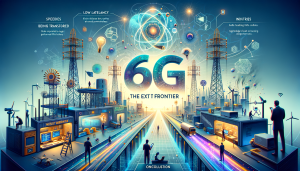
Although 6G is still in the early stages of development, several countries and companies have already started investing in research and trials. China, for example, has launched a satellite to test 6G technology, while Samsung and Nokia have announced their plans to explore potential 6G applications.
However, it is essential to note that the development of 6G is a long and complex process, and it will likely take several years before it becomes available to the public.
In conclusion, 6G is the next frontier of wireless technology that has the potential to bring significant advancements in various aspects of our lives. With faster speeds, lower latency, and improved connectivity, 6G could transform industries and enhance our daily experiences. However, there are also concerns that need to be addressed before its widespread implementation. As we continue to push the boundaries of technology, it will be exciting to see how 6G will shape the future of wireless communication.


