 Date: Feb 19 2026 - 12:31
- Updated: Feb 19 2026 - 12:37
Date: Feb 19 2026 - 12:31
- Updated: Feb 19 2026 - 12:37
 Category: Data Center
 Tags: AI, Artificial Intelligence, cyberthreats, datacenter, threats

In the age of digital transformation, data centers have become the backbone of modern businesses. These facilities store and process vast amounts of data, powering everything from online transactions to cloud computing. However, with the rise of cyber threats and the increasing complexity of data center operations, traditional security measures are no longer enough to protect these critical infrastructures. This is where AI-driven threat detection comes into play.
Data centers are constantly under attack from a variety of threats, including malware, ransomware, and DDoS attacks. These attacks not only disrupt business operations but also compromise sensitive data and can result in significant financial losses. In the past, data center security relied on traditional security methods like firewalls and antivirus software. However, these methods are no longer sufficient in today’s dynamic threat landscape.
As data centers become more complex and interconnected, traditional security measures struggle to keep up. They are limited by their reliance on predefined rules and signatures, making it difficult to detect new and evolving threats. This is where AI-driven threat detection technology comes in, offering a more proactive and effective approach to data center security.
AI-driven threat detection uses sophisticated algorithms and machine learning techniques to analyze vast amounts of data and identify patterns indicative of potential threats. By continuously monitoring and analyzing network traffic, it can detect anomalies and suspicious activities that may go unnoticed by traditional security measures.
One of the primary benefits of AI-driven threat detection is its ability to learn and adapt. As it processes more data, it becomes more accurate in detecting threats and can adapt to new attack techniques. This makes it a powerful defense mechanism against emerging and evolving threats.
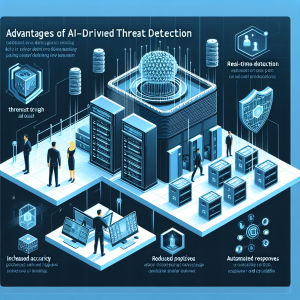
There are several advantages to using AI-driven threat detection in data centers:
Implementing AI-driven threat detection in data centers requires a multi-layered approach. This includes incorporating AI-driven security tools into the data center infrastructure, along with regular monitoring and analysis of network traffic. It’s also essential to have a team of skilled security professionals who can interpret the data and respond appropriately to any detected threats.
Additionally, data centers can leverage AI-driven threat intelligence, which uses machine learning algorithms to analyze threat data from various sources and provide real-time insights into emerging threats. This can help data center operators stay ahead of potential threats and proactively mitigate them before they can cause any harm.
As data centers continue to evolve and become more complex, the need for advanced threat detection will only grow. AI-driven threat detection is poised to become a crucial component of data center security, providing a proactive and effective defense against a wide range of threats.
As AI technology continues to advance, we can expect to see even more sophisticated and powerful AI-driven threat detection systems in the future. These systems will be able to analyze data in real-time, predict and prevent potential threats, and automate response actions, making them an essential tool for securing data centers.
In today’s digital landscape, data centers are under constant threat from cyber attacks. Traditional security measures are no longer enough to protect these critical infrastructures. AI-driven threat detection offers a more proactive and effective approach to data center security, providing real-time detection and response to emerging and evolving threats. As data centers continue to evolve, the adoption of AI-driven threat detection will become increasingly essential, ensuring the protection of critical data and business operations.