 Date: Apr 20 2026 - 11:58
 Category: Artificial Intelligence
In recent years, the rise of remote work has drastically changed the landscape of the modern workforce. With more and more employees working from home or other locations outside of the traditional office, companies are facing new challenges in terms of cyber-security. Attackers are now targeting remote workers as a potential entry point into a company’s network, making it crucial for organizations to have strong security measures in place. One such measure is Endpoint Detection and Response (EDR).
In this blog post, we will discuss what EDR is and how it can protect remote teams from cyber threats.

Endpoint Detection and Response (EDR) is a cyber-security solution that helps organizations detect and respond to cyber threats at the endpoint level. Endpoints refer to devices such as laptops, desktops, and mobile devices that connect to a company’s network. EDR tools monitor endpoints for suspicious activity and provide real-time visibility into potential threats. In simpler terms, EDR acts as a security guard for your devices, constantly monitoring and protecting them from cyber attacks.

EDR works by continuously monitoring and collecting data from all endpoints in a network. This data is then analyzed in real-time, using advanced algorithms and machine learning, to identify any malicious or suspicious activity. If a threat is detected, the EDR system will immediately respond by isolating the affected endpoint, blocking the threat, and alerting the security team. This quick response time is crucial in preventing cyber attacks from spreading and causing further damage.
Most EDR solutions also offer features such as advanced threat hunting, file and memory analysis, and behavioral monitoring. These features allow security teams to investigate and respond to threats more efficiently, making EDR an essential tool in protecting remote teams.

With remote work becoming the new norm, the security perimeter of a company’s network has expanded beyond the traditional office. This means that employees are now accessing company data and systems from various devices and locations. With this increase in remote access, the risk of cyber attacks has also grown exponentially.
EDR is essential for remote teams as it provides protection at the endpoint level, which is where most cyber attacks originate. It also gives companies visibility into all devices accessing their network, regardless of location, ensuring that all endpoints are secure.

1. Real-time Monitoring: EDR tools continuously monitor endpoints and their activities, providing real-time visibility into any potential threats. This is especially important for remote teams, as it allows for quick detection and response to cyber attacks, regardless of the employee’s location.
2. Advanced Threat Detection: EDR uses advanced algorithms and machine learning to identify and block potential threats. This technology is continuously improving, making it difficult for cyber-criminals to bypass EDR and gain access to a company’s network.
3. Endpoint Isolation: In the event of a cyber attack, EDR can isolate the affected endpoint, preventing the attack from spreading to other devices on the network. This is crucial for remote teams, as it minimizes the damage caused by a potential breach.
4. Remote Management: EDR solutions can be managed remotely, allowing security teams to monitor and respond to threats from anywhere. This is especially useful for remote teams, as it enables them to work efficiently, even when not physically present in the office.
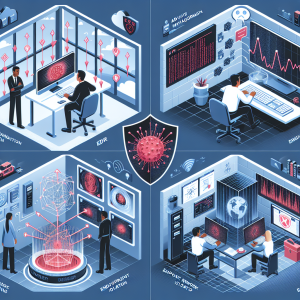
While EDR can provide excellent protection for remote teams, it’s essential to follow best practices to ensure maximum security. Here are some tips on how to use EDR effectively for remote teams:
1. Implement Strong Endpoint Security Policies: Companies should have strict policies in place for remote workers, such as using company-issued devices and not connecting to public or unsecured networks.
2. Regularly Update and Patch Endpoints: Ensure that all endpoints have the latest updates and patches to fix any known vulnerabilities.
3. Train Employees on Cyber-security: Remote employees should be educated on cyber-security best practices, such as identifying phishing emails and using strong passwords.
4. Use Multi-Factor Authentication (MFA): MFA adds an extra layer of security, making it more difficult for cyber-criminals to gain access to company data and systems.
In conclusion, remote work has become a crucial part of the modern workforce, and with it comes new cyber-security challenges. Endpoint Detection and Response (EDR) is an essential tool for protecting remote teams from cyber threats. Its real-time monitoring, advanced threat detection, and remote management capabilities make it a valuable asset for organizations with remote workers. By following best practices and implementing EDR, companies can ensure the security of their remote teams and protect their sensitive data and systems.