 Date: Apr 06 2026 - 12:26
 Category: Artificial Intelligence
 Tags: AI, Artificial Intelligence, cognitionengines, machinelearning, multiagentai
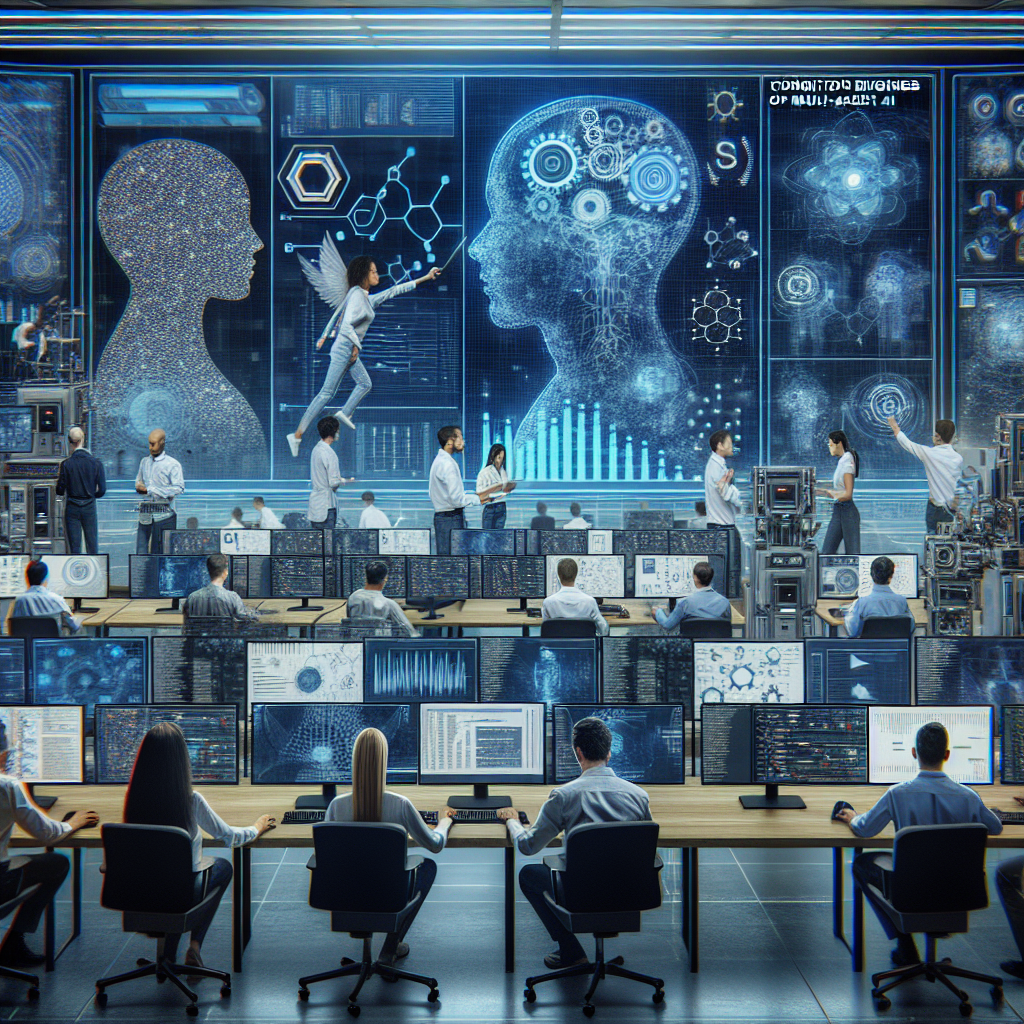
Artificial intelligence (AI) has been a hot topic in recent years, with advancements in technology allowing for the development of intelligent systems and machines. One area of AI that has gained significant attention is multi-agent AI, where multiple agents work together to achieve a common goal. Building cognition engines for multi-agent AI is a complex and challenging task, but it has the potential to revolutionize industries such as transportation, healthcare, and manufacturing. In this blog post, we will explore the concept of cognition engines in multi-agent AI and how they are built.

Before we delve into the specifics of building cognition engines for multi-agent AI, it is essential to understand what a cognition engine is. In simple terms, a cognition engine is a system that enables intelligent agents to gather, process, and use information to make decisions. It is the brain of an intelligent system, allowing it to perceive the environment, learn from past experiences, and adapt to new situations.
In the context of multi-agent AI, cognition engines enable agents to communicate and collaborate effectively, leading to more efficient and intelligent decision-making.
Machine learning plays a crucial role in the development of cognition engines for multi-agent AI. Machine learning algorithms allow agents to learn from data and improve their decision-making abilities over time.
In a multi-agent AI system, each agent can gather data from its interactions with the environment and other agents, which is then used by the cognition engine to train and improve its performance. As the agents continue to interact and learn, the cognition engine becomes more adept at making decisions and coordinating actions between agents.
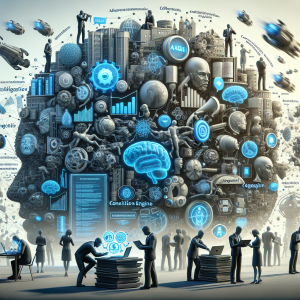
Building cognition engines for multi-agent AI is not without its challenges. One of the main challenges is ensuring that the agents can effectively communicate with each other. Communication is crucial in a multi-agent AI system, as it allows agents to share information and coordinate their actions. However, communication can be challenging when agents have different languages, protocols, and data formats. Cognition engines must be designed to handle these communication barriers and enable seamless communication between agents.
Another challenge is ensuring that the cognition engine can handle the complexity of multi-agent interactions. In a multi-agent AI system, there can be a large number of agents, each with its own goals, preferences, and constraints. The cognition engine must be able to process and analyze all this information to make decisions that are beneficial for all agents involved. This requires sophisticated algorithms and techniques to handle the complexity and uncertainty of multi-agent interactions.
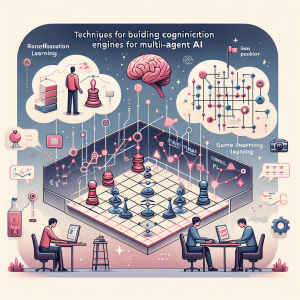
To overcome the challenges mentioned above, developers use various techniques to build cognition engines for multi-agent AI. One of the techniques is reinforcement learning, where agents are rewarded for making successful decisions and penalized for making poor decisions. This encourages agents to learn and improve their decision-making abilities over time. Another technique is game theory, which involves modeling the interactions between agents as a game and using strategies to reach a Nash equilibrium, where no agent can improve its outcome by changing its strategy.
Another popular technique is deep learning, which uses neural networks to process and analyze complex data sets. Deep learning has been successfully used in multi-agent AI systems to learn and predict the behavior of other agents. The use of deep learning allows cognition engines to make more accurate and efficient decisions, leading to better performance of the multi-agent AI system.
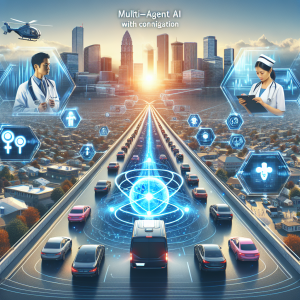
The use of multi-agent AI with cognition engines has the potential to transform various industries. One of the most prominent applications is in transportation. With the rise of autonomous vehicles, there is a need for these vehicles to communicate and coordinate with each other to avoid accidents and congestion. Multi-agent AI with cognition engines can enable autonomous vehicles to communicate and make decisions in real-time, leading to safer and more efficient transportation systems.
In healthcare, multi-agent AI with cognition engines can be used to improve patient care. Intelligent agents can gather patient data, such as medical history and symptoms, and use it to make accurate diagnoses and recommend treatment plans. The use of cognition engines allows for more personalized and efficient healthcare, leading to better patient outcomes.
Building cognition engines for multi-agent AI is a complex and challenging task, but it has the potential to revolutionize various industries. With the advancements in machine learning and other techniques, cognition engines are becoming more sophisticated and capable of handling the complexity of multi-agent interactions. As we continue to make progress in this field, we can expect to see more real-world applications of multi-agent AI with cognition engines, leading to a smarter and more connected world.