 Date: Jul 02 2026 - 12:36
 Category: Quantum Computing
 Tags: ITprofessionals, Quantum Algorithms, Quantum Technology, quantumcomputing, Qubits, Tech Training
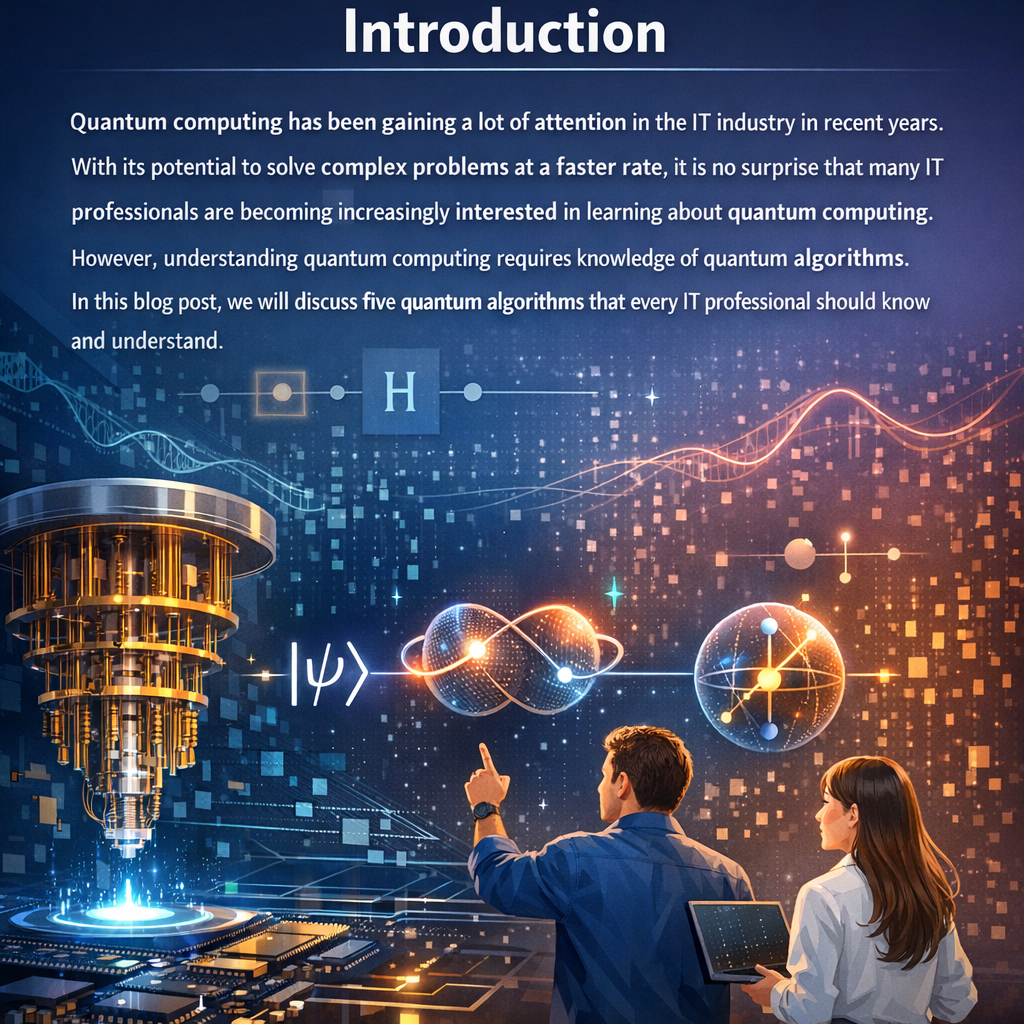
Quantum computing has been gaining a lot of attention in the IT industry in recent years. With its potential to solve complex problems at a faster rate, it is no surprise that many IT professionals are becoming increasingly interested in learning about quantum computing.
However, understanding quantum computing requires knowledge of quantum algorithms. In this blog post, we will discuss five quantum algorithms that every IT professional should know and understand.
Before we dive into the specific algorithms, let’s first understand what a quantum algorithm is. Simply put, a quantum algorithm is a set of instructions or steps that are designed to be executed on a quantum computer.
Unlike classical algorithms, which are based on the principles of classical physics, quantum algorithms are based on the principles of quantum mechanics. These algorithms take advantage of the unique properties of quantum bits (qubits) to solve problems more efficiently.
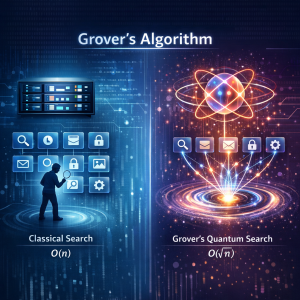
Grover’s algorithm is one of the most well-known quantum algorithms. It is a search algorithm that can be used to find a particular item in an unsorted database. In classical computing, the best-case scenario for searching an unsorted database is to check each item one by one, which takes O(n) time.
However, Grover’s algorithm can search the same database in O(√n) time, making it much faster than classical algorithms. This algorithm has significant implications for database searching, and it is also the basis for many other quantum algorithms.
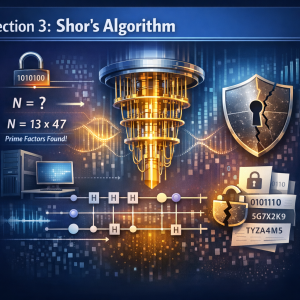
Shor’s algorithm is another popular quantum algorithm. It is a factorization algorithm that can be used to find the prime factors of a large number. In classical computing, finding the prime factors of a large number is a time-consuming process.
However, Shor’s algorithm can factorize large numbers in polynomial time, making it much faster than classical algorithms. This algorithm has significant implications for cryptography, as it can efficiently break many commonly used encryption methods.
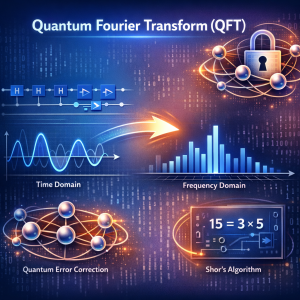
The Quantum Fourier Transform (QFT) is an essential algorithm in quantum computing. It is the quantum version of the classical Fourier transform, which is used to convert a signal from the time domain to the frequency domain. The QFT is crucial in many quantum algorithms, including Shor’s algorithm.
It allows quantum computers to process and manipulate large amounts of data efficiently. The QFT is also used in quantum error correction, which plays a crucial role in making quantum computing more reliable.
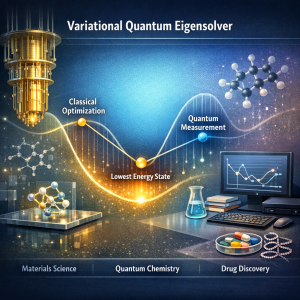
The Variational Quantum Eigensolver (VQE) is a hybrid algorithm that combines classical and quantum computing. It is used to find the lowest energy state of a quantum system. This algorithm is essential in materials science, where it is used to simulate the behavior of molecules and materials.
The VQE is also used in quantum chemistry and drug discovery, where it can significantly speed up the process of finding new materials and drugs.
Quantum computing has the potential to revolutionize the IT industry, and understanding quantum algorithms is essential for any IT professional who wants to stay ahead of the curve. In this blog post, we have discussed five quantum algorithms that every IT professional should know and understand. These algorithms have significant implications for various fields, such as database searching, cryptography, materials science, and drug discovery.
As the field of quantum computing continues to advance, more quantum algorithms are being developed, and it is crucial for IT professionals to stay updated and familiarize themselves with these algorithms to harness the full potential of quantum computing.