 Date: Aug 08 2025 - 10:00
- Updated: Aug 14 2025 - 08:26
Date: Aug 08 2025 - 10:00
- Updated: Aug 14 2025 - 08:26
 Category: 6G
 Tags: 6G

As technology continues to evolve at a rapid pace, we are already looking towards the future and what it holds in terms of connectivity. With the advent of 5G technology, we have seen significant improvements in terms of speed, latency, and connectivity. However, the next big thing on the horizon is 6G, which promises to take these factors to a whole new level. In this blog post, we will explore how 6G will redefine speed, latency, and connectivity, and the impact it will have on our lives.
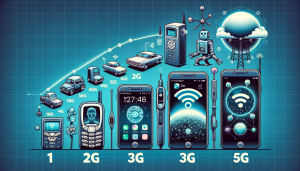
To understand how 6G will redefine speed, latency, and connectivity, we must first understand how wireless connectivity has evolved over the years. The very first generation of wireless technology, 1G, was introduced in the 1980s and allowed for basic voice calls. With the introduction of 2G in the 1990s, we saw the ability to send text messages. 3G, which came about in the early 2000s, brought us mobile internet and the ability to browse the web on our phones.
Then came 4G, which revolutionized the way we use our smartphones with faster internet speeds and the ability to stream high-quality videos on the go. And most recently, 5G has brought us even faster speeds and lower latency, making it possible for technologies like self-driving cars and remote surgeries to become a reality.

So, what can we expect from 6G? While it is still in the early stages of development, experts predict that 6G will have a data transfer speed of 1 terabit per second (Tbps), which is 8,000 times faster than 5G. This means that you could download a full HD movie in just a second! In terms of latency, 6G is expected to have a response time of just 1 millisecond, making it virtually instantaneous. This will be crucial for applications that require real-time interactions, such as remote surgeries and virtual reality gaming.
Another exciting feature of 6G is its ability to connect a massive number of devices simultaneously. While 5G can connect up to 1 million devices per square kilometer, 6G is expected to handle up to 10 million devices, making it ideal for the Internet of Things (IoT) and smart cities. This will open up a whole new world of possibilities and make our lives more connected than ever before.
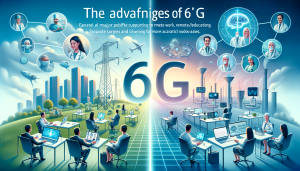
With such impressive features, it’s no surprise that 6G is expected to bring about numerous advantages. One of the significant advantages is the potential for remote work and education. With the pandemic forcing us to adapt to remote work and online learning, 6G could take this to the next level by providing a seamless and efficient virtual experience. This could also lead to a more flexible work environment and reduce the need for physical office spaces, resulting in cost savings for businesses.
Another advantage of 6G is its potential to transform healthcare. With its low latency and high speeds, 6G could enable remote surgeries and consultations. This would be life-changing for patients in remote areas who do not have access to quality healthcare. Additionally, 6G could also facilitate the use of advanced technologies like artificial intelligence and machine learning in healthcare, leading to more accurate diagnoses and treatments.

The impact of 6G will not be limited to just individuals, but it will also have a significant influence on industries. The high data speeds and low latency of 6G could revolutionize the manufacturing industry by enabling real-time monitoring and control of machinery, leading to increased efficiency and productivity. The transportation industry could also see significant improvements with the implementation of 6G, as it could facilitate the development of self-driving cars and smart traffic management systems.
The entertainment industry could also benefit greatly from 6G. With the ability to stream high-quality content instantaneously, we could see a rise in virtual reality and augmented reality experiences. This could also lead to more immersive gaming experiences, blurring the lines between the virtual and real world.

As with any new technology, there are always challenges and concerns that need to be addressed. One of the main challenges with 6G is the development of the necessary infrastructure. 6G will require a higher number of cell towers and antennas compared to 5G, and this could be a significant hurdle, especially in remote areas. Additionally, there are also concerns about the potential health risks of exposure to higher frequencies and radiation.
Another concern is the cost of implementing and maintaining 6G. With the development of new technology, there will inevitably be a significant investment required, and it remains to be seen if this cost will be passed on to consumers. Additionally, there may also be concerns about privacy and security with the massive amount of data that will be transmitted through 6G networks.
In conclusion, 6G is set to redefine speed, latency, and connectivity in ways we can’t even imagine. It has the potential to transform industries, enable new technologies, and make our lives more connected than ever before. However, it also comes with its own set of challenges and concerns that need to be addressed. As we eagerly await the arrival of 6G, one thing is for sure – it will bring about a new era of connectivity and change our world in ways we have yet to see.