 Date: Aug 12 2025 - 07:06
- Updated: Sep 29 2025 - 07:39
Date: Aug 12 2025 - 07:06
- Updated: Sep 29 2025 - 07:39
 Category: Data Management
 Tags: hybridcloud, hybridcloudstorage, IT, ITprofessionals

As technology continues to evolve at a rapid pace, IT teams must constantly adapt and learn new strategies to keep up with the changing landscape. One area that has seen significant growth and development in recent years is hybrid cloud storage. This combination of public and private cloud storage offers a range of benefits for businesses, including increased flexibility, scalability, and cost-effectiveness. In this blog post, we will discuss the top hybrid cloud storage strategies that IT teams must learn in 2025 to stay ahead of the game.
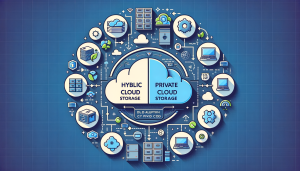
Before diving into the strategies, it is essential to have a clear understanding of what hybrid cloud storage is and how it differs from traditional storage methods. In simple terms, hybrid cloud storage is the combination of public and private cloud storage services, allowing organizations to store data and applications in both on-premise and off-premise environments.
This hybrid approach offers the best of both worlds, allowing businesses to take advantage of the benefits of both public and private cloud storage.

One of the key strategies that IT teams must learn for successful hybrid cloud storage is data management and security. With data being stored in multiple locations, it is crucial to have a robust data management system in place to ensure data is easily accessible and secure.
This includes implementing data encryption, access controls, and monitoring tools to protect sensitive information from unauthorized access. Additionally, IT teams must also have a clear data backup and recovery plan in place to mitigate the risk of data loss.

Another crucial aspect of hybrid cloud storage is integration and interoperability. As businesses increasingly adopt hybrid cloud solutions, it is essential to have a seamless integration between different cloud environments.
This includes ensuring that applications and data can easily move between public and private clouds without any disruptions. IT teams must also have a deep understanding of the different cloud platforms and their compatibility with each other to avoid any compatibility issues.

Cost optimization is a significant driving factor for businesses to adopt hybrid cloud storage. However, to achieve maximum cost savings, IT teams must have a thorough understanding of their organization’s storage needs and the different pricing models offered by cloud providers.
This includes analyzing storage usage patterns, identifying areas for cost optimization, and leveraging the right combination of public and private cloud services to meet their storage needs while keeping costs in check.

Automation and orchestration are becoming increasingly important in hybrid cloud storage management. As businesses scale up their storage needs, manual management becomes a time-consuming and error-prone process.
Automation and orchestration tools can help IT teams streamline storage management tasks, such as provisioning, monitoring, and data migration. By automating these processes, IT teams can save time and resources, allowing them to focus on more critical tasks.
In conclusion, hybrid cloud storage is here to stay, and IT teams must continuously evolve their strategies to optimize its benefits fully. By understanding the basics of hybrid cloud storage, implementing strong data management and security practices, ensuring integration and interoperability, optimizing costs, and leveraging automation, IT teams can effectively manage and scale their organization’s storage needs. As we look towards 2025, these strategies will become even more critical as businesses increasingly move towards hybrid cloud solutions. By staying ahead of the curve and constantly learning and adapting, IT teams can ensure their organizations are well-equipped for the future of hybrid cloud storage.