 Date: Sep 02 2025 - 07:29
 Category: Data Control
 Tags: datacontrol

In today’s digital age, data has become one of the most valuable assets for businesses and individuals alike. With the rise of big data and the increasing need for data-driven decision making, the demand for effective data control has also grown. The challenge lies in managing and protecting this vast amount of data while ensuring its accuracy and accessibility. Fortunately, emerging technologies are making it easier to control and manage data effectively. In this blog post, we will explore some of these emerging technologies and how they are revolutionizing data control.

Blockchain technology has gained significant attention in recent years, mainly due to its association with cryptocurrencies such as Bitcoin. However, its potential goes beyond digital currencies. Blockchain is a decentralized ledger that records transactions in a secure and transparent manner. Each block in the chain contains a unique cryptographic code, making it nearly impossible for anyone to alter the data without being detected.
This technology has the potential to transform the way data is stored and managed. With blockchain, data can be securely stored and shared between multiple parties without the need for a central authority or intermediary. This eliminates the risk of data manipulation or tampering, ensuring data integrity. Moreover, blockchain also enables data sharing while maintaining privacy, as users can control who has access to their data through encryption keys.

Artificial Intelligence (AI) is another emerging technology that is transforming data control. AI uses algorithms and machine learning to analyze large datasets and identify patterns and insights. This technology has made it possible to process and analyze vast amounts of data in a fraction of the time it would take a human, making data control more efficient.
AI can also help with data quality control by identifying and correcting errors and anomalies in datasets. It can also detect patterns of data usage and identify any potential data breaches, ensuring data security. As AI continues to evolve, it has the potential to automate data control processes, saving time and resources for businesses.

The Internet of Things (IoT) refers to the network of physical devices, vehicles, home appliances, and other items embedded with sensors, software, and connectivity, enabling them to collect and exchange data. With the increasing adoption of IoT devices, the amount of data generated is also growing exponentially. This presents a challenge for data control as traditional methods may not be able to handle such large amounts of data.
However, IoT also presents an opportunity for better data control. With the help of AI and machine learning, IoT devices can analyze data in real-time and make decisions autonomously, reducing the burden on human operators. Moreover, IoT networks can also be secured using blockchain technology, ensuring the integrity and privacy of data collected by these devices.
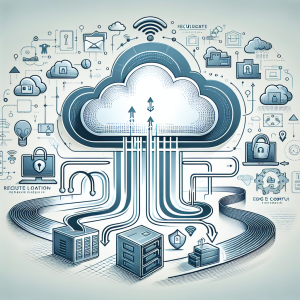
Cloud computing has been a game-changer in the world of data control. With cloud computing, data can be stored and accessed remotely, eliminating the need for physical storage devices. This has made it easier for businesses to manage and control large amounts of data without the need for expensive hardware and infrastructure.
Moreover, cloud computing also offers data backup and disaster recovery services, ensuring that data is always available and secure. With the emergence of edge computing, data can now be processed and analyzed closer to the source, reducing latency and improving data control.
style=”float: right; margin: 0 0 20px 20px; width: 300px; height: auto; border-radius: 8px;”width=”300″ height=”300″ />
The increasing amount of data being generated and collected has also led to stricter regulations and compliance requirements. Organizations must comply with data protection laws, such as the General Data Protection Regulation (GDPR) and the California Consumer Privacy Act (CCPA), to ensure the privacy and security of personal data.
To meet these compliance requirements, organizations need effective data governance strategies. Data governance involves the processes, policies, and controls that ensure the availability, usability, integrity, and security of data. With the help of emerging technologies such as AI and blockchain, organizations can implement data governance and compliance measures more efficiently.
The amount of data generated and collected is only going to increase in the future, making it crucial for businesses and individuals to have effective data control strategies in place. Emerging technologies such as blockchain, AI, IoT, and cloud computing are revolutionizing data control and management. By leveraging these technologies, organizations can ensure the integrity, security, and accessibility of their data, enabling them to make informed decisions and stay ahead in today’s data-driven world.