 Date: Nov 03 2025 - 11:35
 Category: GPU
 Tags: AI, finance, GPU, healthcare

When you think of graphics processing units (GPUs), your mind may automatically jump to video games and graphic design. However, GPUs are not just limited to these industries. In fact, they are now driving innovations in a variety of fields, including healthcare, finance, and automotive AI. In this blog post, we will explore how GPUs are revolutionizing these industries and the impact they are having on society.

GPUs were originally designed to handle complex graphics and images, making them a crucial component in video game consoles and computers. However, with the rise of artificial intelligence (AI), GPUs have found a new purpose. AI requires massive amounts of data processing and analysis, which GPUs are uniquely capable of handling due to their parallel processing capabilities.
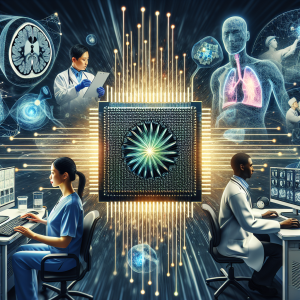
In the healthcare industry, GPUs are being used for medical imaging, drug discovery, and patient diagnosis. Medical imaging, such as MRI and CT scans, generate large amounts of data that need to be processed quickly and accurately. GPUs can handle this data-intensive task with ease, allowing medical professionals to analyze and diagnose patients faster and more accurately.
GPUs are also playing a crucial role in drug discovery. With the help of AI algorithms and GPUs, researchers can analyze vast amounts of data to identify potential drug targets and design new drugs. This process, which used to take years, can now be accomplished in a fraction of the time, leading to faster drug development and potentially life-saving treatments.

The finance industry is another sector that is benefitting from the use of GPUs. With the rise of high-frequency trading, financial institutions need to process large amounts of data in real-time. GPUs are able to handle this task efficiently, allowing for faster and more accurate trading decisions.
In addition to trading, GPUs are also being used for risk management and fraud detection. By analyzing vast amounts of data, GPUs can identify potential risks and fraudulent activities, providing financial institutions with valuable insights to make informed decisions and protect their assets.

The automotive industry is rapidly evolving with the development of self-driving cars and advanced driver-assistance systems (ADAS). These technologies rely heavily on AI and machine learning algorithms, which require massive amounts of data processing. GPUs are essential in this process, enabling cars to process and analyze data from sensors and cameras in real-time, allowing for safer and more efficient driving.
Moreover, GPUs are also being used for advanced computer vision in self-driving cars, allowing them to recognize and interpret objects on the road, such as other vehicles, pedestrians, and traffic signals. This technology is crucial for the success of autonomous vehicles and is only made possible due to the processing power of GPUs.

As technology continues to advance, the demand for GPUs will only increase. With the rise of 5G networks, the Internet of Things (IoT), and the development of more advanced AI algorithms, GPUs will become even more critical in handling the vast amounts of data generated from these technologies.
In addition, the development of edge computing, which involves processing data closer to the source, will also require the use of GPUs. This is because edge devices, such as smartphones and IoT devices, will need to handle tasks that were previously only possible on high-powered computers, and GPUs are the key to making this possible.
In conclusion, GPUs are not just limited to the gaming and graphic design industries. They are now playing a vital role in driving innovations in healthcare, finance, and automotive AI. With their parallel processing capabilities, GPUs are able to handle the massive amounts of data required for these industries to thrive. As technology continues to advance, we can expect GPUs to play an even more significant role in shaping our society and driving further innovations.