 Date: Jul 11 2025 - 10:27
- Updated: Jul 11 2025 - 10:28
Date: Jul 11 2025 - 10:27
- Updated: Jul 11 2025 - 10:28
 Category: Storage
 Tags: Storage

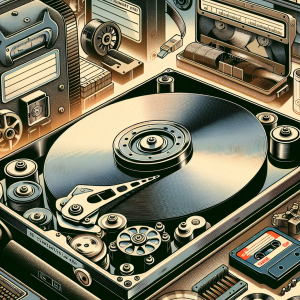
Storage technology has come a long way since the early days of computing. From the bulky and slow spinning disks to the lightning-fast NVMe drives, the evolution of storage has been fascinating to witness. But with so many options available, it can be overwhelming to choose the right storage solution for your needs. In this blog post, we will take a practical approach to understanding the evolution of storage and guide you through the different types of storage technologies available in the market.
In the early days of computing, the primary storage medium used was the spinning disk, also known as a hard disk drive (HDD). These drives were made up of metal platters coated with a magnetic material and a read/write head that moved across the platters to access and store data.
HDDs were a significant improvement over the previous storage method, punch cards, and magnetic tapes. They were faster, had larger storage capacity, and were more reliable. However, they were still slow compared to today’s standards, with average read/write speeds of around 100MB/s.
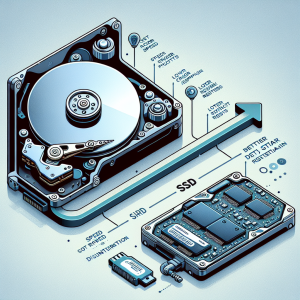
As technology continued to advance, the need for faster and more reliable storage became apparent. This led to the development of solid-state drives (SSDs). Unlike HDDs, SSDs do not have any moving parts and use flash memory to store data.
SSDs were a game-changer in the world of storage. They were much faster than HDDs, with read/write speeds of up to 550MB/s. They also had higher durability, lower power consumption, and better shock resistance. However, they were more expensive than HDDs, which limited their adoption in the consumer market.
As the demand for faster and more efficient storage continued to grow, the industry introduced Non-Volatile Memory Express (NVMe) drives. NVMe is a communication protocol designed specifically for solid-state drives, allowing them to take full advantage of their speed and performance.
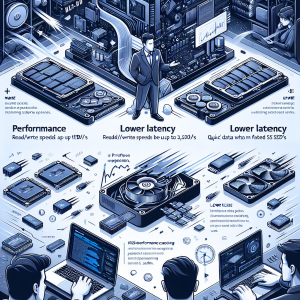
NVMe drives have read/write speeds of up to 3,500MB/s, making them significantly faster than both HDDs and SSDs. They also have lower latency, which means data can be accessed and processed more quickly. This makes them ideal for high-performance computing tasks such as gaming, video editing, and data analysis.
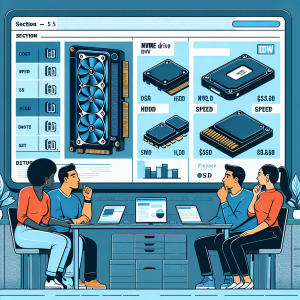
While NVMe drives are a popular choice for high-performance computing, they have also gained traction in the enterprise market. Many businesses are now using NVMe drives in their data centers to handle their growing storage needs.
The high speed and low latency of NVMe drives allow for faster data processing, leading to improved efficiency and productivity. They are also ideal for handling large databases and virtualization workloads, making them an excellent choice for enterprise storage solutions.
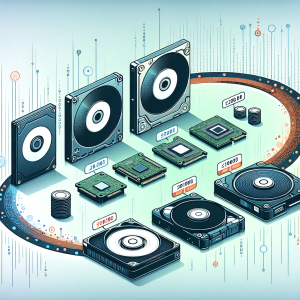
With so many storage options available, it can be challenging to determine which one is best for your needs. Here are a few things to consider when choosing a storage solution:
– **Usage:** Consider your workload and how you will be using the storage. If you need high-speed data processing, NVMe drives are the way to go. If you need large storage capacity at a lower cost, HDDs might be a better option.
– **Budget:** NVMe drives are still relatively expensive compared to HDDs and SSDs, so if you have a limited budget, you may need to compromise on speed and opt for a more affordable option.
– **Future-proofing:** As technology continues to advance, it’s important to consider future needs. NVMe drives are currently the fastest and most efficient storage solution, and they are likely to remain so for the foreseeable future.
The evolution of storage technology has been driven by the need for faster and more efficient data processing. From the early days of spinning disks to the lightning-fast NVMe drives, we have come a long way. When choosing a storage solution, it’s essential to consider your specific needs and budget. If you require high-speed data processing, NVMe drives are the way to go, but if you need large storage capacity at a lower cost, HDDs or SSDs may be a better choice. Whichever option you choose, make sure to keep an eye on future advancements in storage technology to stay ahead of the game.